CASE STUDY
TABLE BOOKING APP
TABLE
BOOKING APP
CASE STUDY
PROJECT SUMMARY
The product:
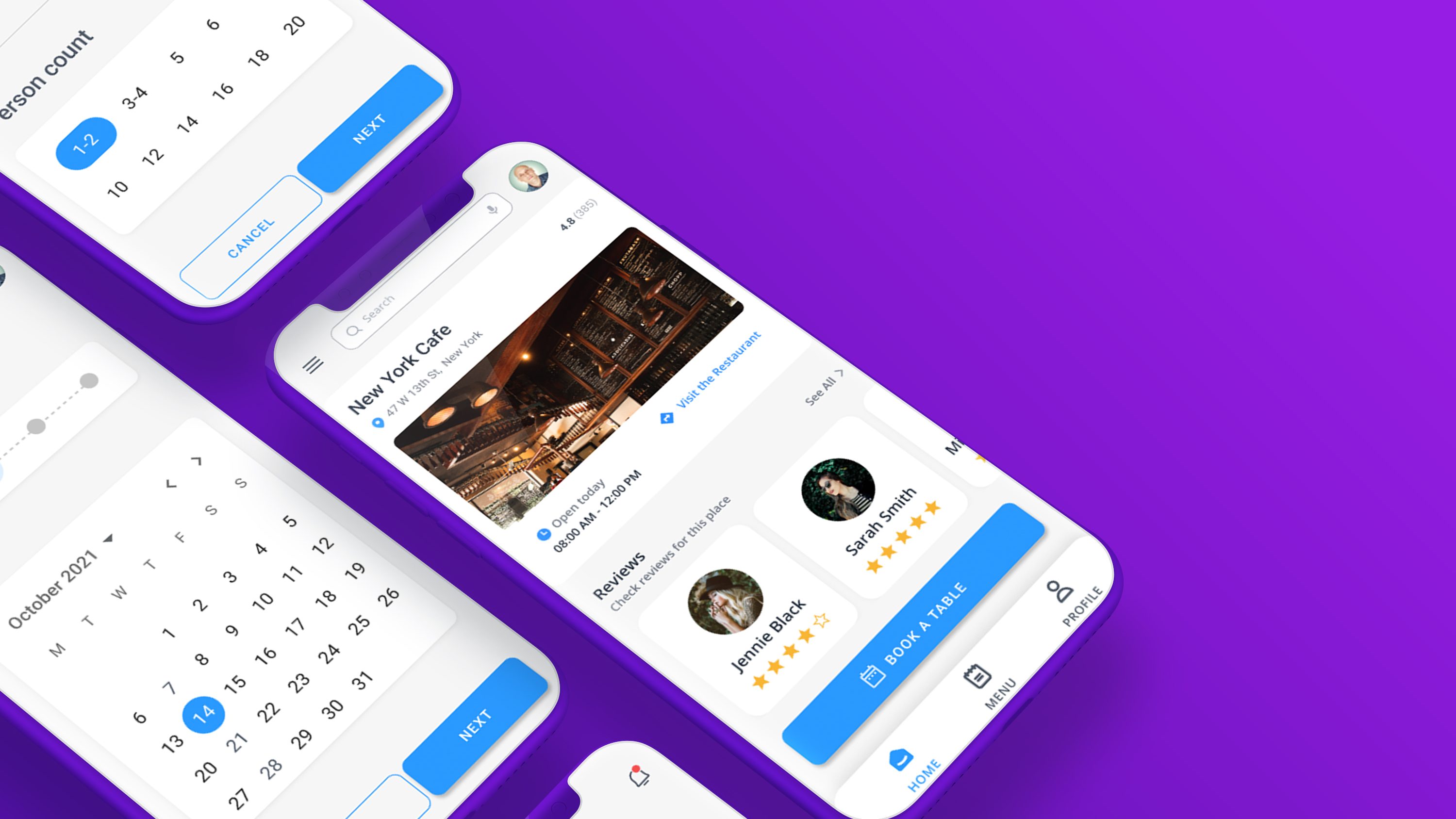
NY cafe is located in Manhattan. It is specific in that it is a favorite place for business people as well as locals, who use it to drink coffee during their break and to enjoy it with their friends.
Project duration:
March 2021 to November 2021.
The problem:
Busy workers and locals have a lot of daily responsibilities so they want to make sure they have a table provided at a time that suits them to stay in the cafe.
The Goal:
Design an app for NY Cafe that allows users to easily book a table. Determine if users can perform basic tasks within the booking application. Find out if the booking app is easy and comfortable to use.
My role:
UX designer designing an app for NY Cafe from conception to delivery.
Responsibilities:
Conducting interviews and researches, making paper and digital wireframing, low and high-fidelity prototyping, conducting usability studies, accounting for accessibility, and iterating on designs.
PROJECT SUMMARY
The product:
NY cafe is located in Manhattan. It is specific in that it is a favorite place for business people as well as locals, who use it to drink coffee during their break and to enjoy it with their friends.
Project duration:
March 2021 to November 2021.
The problem:
Busy workers and locals have a lot of daily responsibilities so they want to make sure they have a table provided at a time that suits them to stay in the cafe.
The Goal:
Design an app for NY Cafe that allows users to easily book a table. Determine if users can perform basic tasks within the booking application. Find out if the booking app is easy and comfortable to use.
My role:
UX designer designing an app for NY Cafe from conception to delivery.
Responsibilities:
Conducting interviews and researches, making paper and digital wireframing, low and high-fidelity prototyping, conducting usability studies, accounting for accessibility, and iterating on designs.
DESIGN & DEVELOPMENT PROCESS
Design thinking is a user-centered approach to problem-solving. It helps designers create
solutions that address a real user problem and are functional and affordable. There are five
phases in the design thinking process: empathize, define, ideate, prototype, and test. Each
phase of the framework answers a specific question.
empathize
define
ideate
prototype
test
DESIGN & DEVELOPMENT PROCESS
Design thinking is a user-centered approach to problem-solving. It helps designers create
solutions that address a real user problem and are functional and affordable. There are five
phases in the design thinking process: empathize, define, ideate, prototype, and test. Each
phase of the framework answers a specific question.
empathize
define
ideate
prototype
test
You gotta know that you're better than anybody, 'cause to me, if you don't go in like that, you're gonna lose! They're gonna punk you out! On any stage, You've got to go in believing, 'I can do this better than anybody.'– Stuart Scott
You gotta know that you're better than anybody, 'cause to me, if you don't go in like that, you're gonna lose! They're gonna punk you out! On any stage, You've got to go in believing, 'I can do this better than anybody.'– Stuart Scott
Understanding the user
● User research
● Personas
● Problem statements
● User journey maps
Understanding
the user
● User research
● Personas
● Problem statements
● User journey maps
USER RESEARCH: SUMMARY
I conducted interviews and created empathy maps to understand the needs of NY Cafe guests. My research was focused on adults who have a dynamic daily routine and want to enjoy a coffee at a pre-scheduled time.
This user group confirmed initial assumptions about NY Cafe guests' problems, but research also revealed other user problems that make it difficult to book a table such as accessibility.
This user group confirmed initial assumptions about NY Cafe guests' problems, but research also revealed other user problems that make it difficult to book a table such as accessibility.
Students
25%
First-Jobbers
15%
Mid-Age Workers
40%
Business professionals
35%
USER RESEARCH: SUMMARY
I conducted interviews and created empathy maps to understand the needs of NY Cafe guests. My research was focused on adults who have a dynamic daily routine and want to enjoy a coffee at a pre-scheduled time.
This user group confirmed initial assumptions about NY Cafe guests' problems, but research also revealed other user problems that make it difficult to book a table such as accessibility.
This user group confirmed initial assumptions about NY Cafe guests' problems, but research also revealed other user problems that make it difficult to book a table such as accessibility.
Students
25%
First-Jobbers
15%
Mid-Age Workers
40%
Business professionals
35%
USER RESEARCH: PAIN POINTS
Time
Simple navigation and search
functions are vital to ensure this
is a seamless process. That was
the largest problem identified
Search & Navigation
Design an app for NY Cafe that allows users to
easily book a table. Determine if users can
perform basic tasks within the booking
application. Find out if the booking app is easy
and comfortable to use.
USER RESEARCH: PAIN POINTS
Time
Simple navigation and search
functions are vital to ensure this
is a seamless process. That was
the largest problem identified
Search & Navigation
Design an app for NY Cafe that allows users to
easily book a table. Determine if users can
perform basic tasks within the booking
application. Find out if the booking app is easy
and comfortable to use.
PERSONA: DAVID CARTER
Age: 40
Education: Master in Finance
Hometown: New York City
Family: Married, 2 children
Occupation: Financial Analyst
Education: Master in Finance
Hometown: New York City
Family: Married, 2 children
Occupation: Financial Analyst
I often need time for myself to relax and recharge during my work day– David Carter
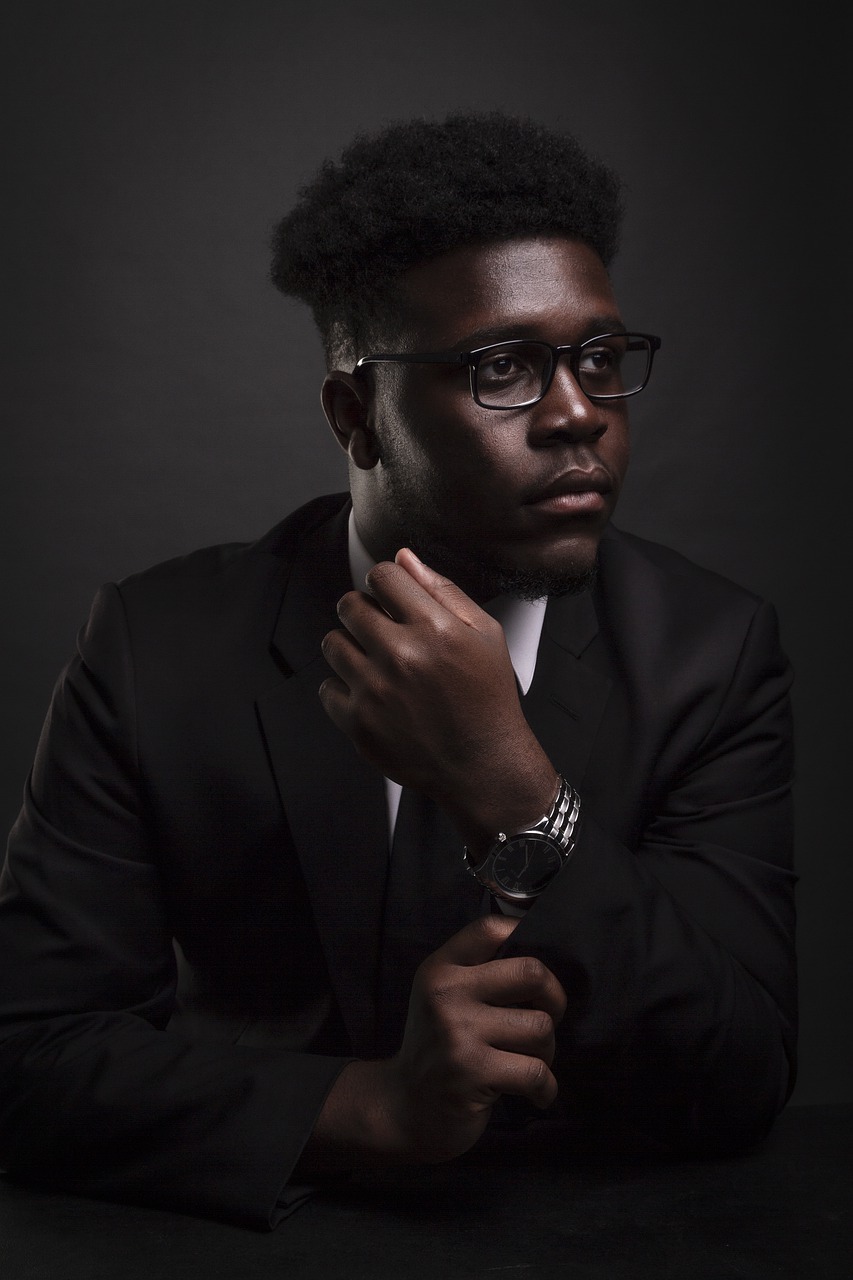
David is a very busy 40-year-old financial analyst. He currently works for a big finance company located in Downtown New York. Most of his work involves working in an overcrowded office, so he often needs to relax a bit.
David likes to drink a lot of cups of coffee a day, so he got bored of office coffee. David likes to drink coffee in a quiet environment where he can also organize informal meetings with his associates. He doesn't have time to wait in lines, so he likes to reserve his table in advance.
David likes to drink a lot of cups of coffee a day, so he got bored of office coffee. David likes to drink coffee in a quiet environment where he can also organize informal meetings with his associates. He doesn't have time to wait in lines, so he likes to reserve his table in advance.
PERSONA: DAVID CARTER
Age: 40
Education: Master in Finance
Hometown: New York City
Family: Married, 2 children
Occupation: Financial Analyst
Education: Master in Finance
Hometown: New York City
Family: Married, 2 children
Occupation: Financial Analyst
I often need time for myself to relax and recharge during my work day– David Carter
Problem statement:
David Carter is a busy financial analyst who needs to drink coffee in a quiet environment where he can also organize informal meetings with his associates.
Goals:
• Make a table reservation at the cafe through the app
• Relaxing ambience for a coffee break and informal meetings
• Relaxing ambience for a coffee break and informal meetings
Frustrations:
• Bored with office coffee
• Crowded office
• Crowded office
David is a very busy 40-year-old financial analyst. He currently works for a big finance company located in Downtown New York. Most of his work involves working in an overcrowded office, so he often needs to relax a bit.
David likes to drink a lot of cups of coffee a day, so he got bored of office coffee. David likes to drink coffee in a quiet environment where he can also organize informal meetings with his associates. He doesn't have time to wait in lines, so he likes to reserve his table in advance.
David likes to drink a lot of cups of coffee a day, so he got bored of office coffee. David likes to drink coffee in a quiet environment where he can also organize informal meetings with his associates. He doesn't have time to wait in lines, so he likes to reserve his table in advance.
Problem statement:
David Carter is a busy financial analyst who needs to drink coffee in a quiet environment where he can also organize informal meetings with his associates.
Goals:
• Make a table reservation at the cafe through the app
• Relaxing ambiance for a coffee break and informal meetings
• Relaxing ambiance for a coffee break and informal meetings
Frustrations:
• Bored with office coffee
• Crowded office
• Crowded office
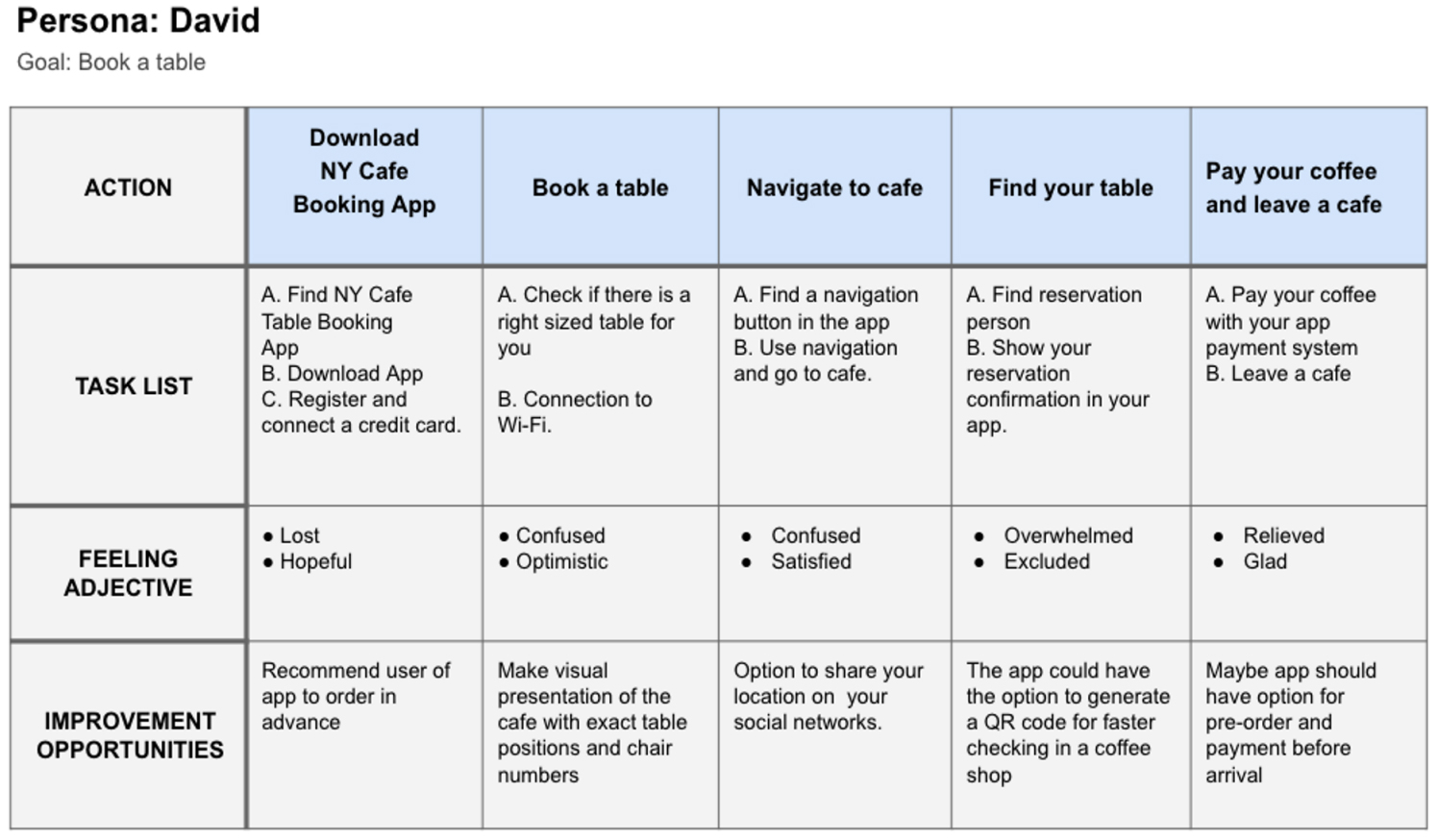
USER JOURNEY MAP
Mapping David’s user
journey revealed how easy
is to go through the app
and complete a booking.
Starting the design
● Paper wireframes
● Digital wireframes
● Low-fidelity prototype
● Usability studies
Starting the design
● Paper wireframes
● Digital wireframes
● Low-fidelity prototype
● Usability studies
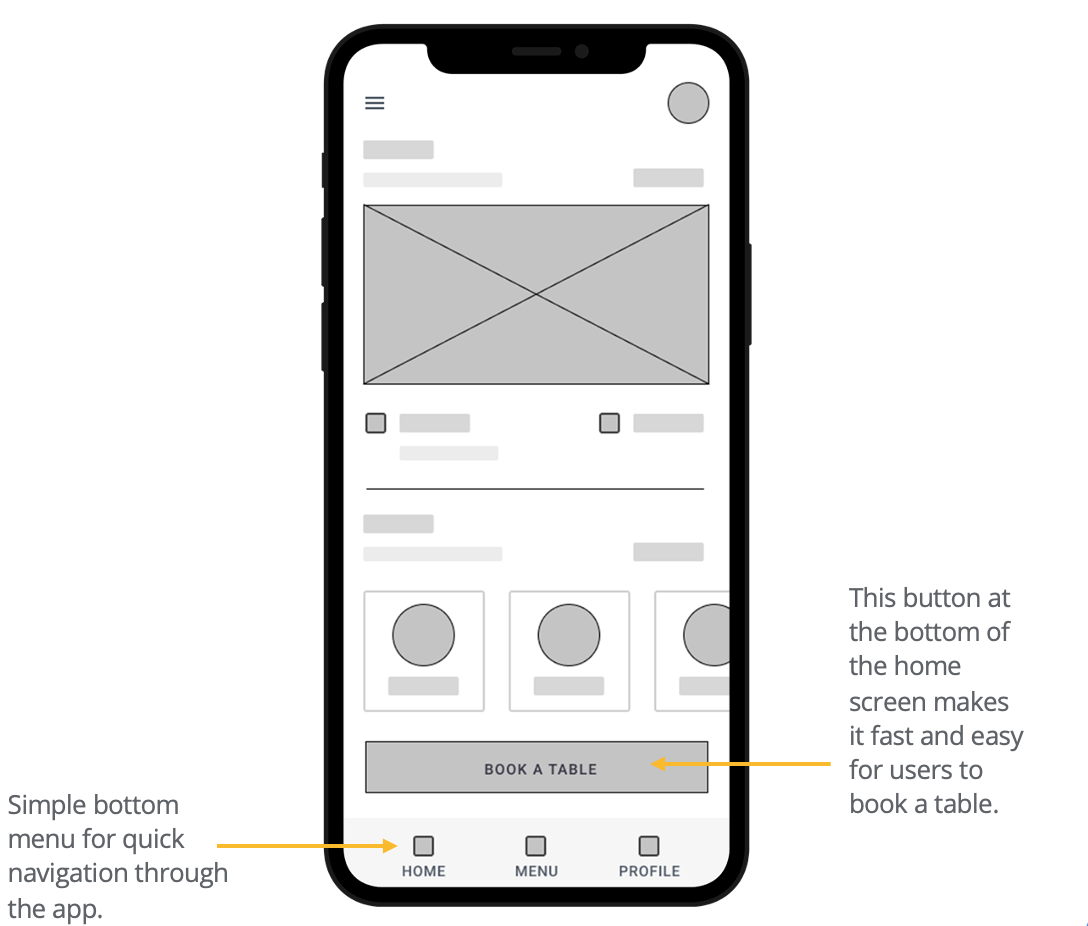
PAPER WIREFRAMES
I tried different approaches
with different design
elements on paper in order
to design the best-organized home screen
before making my digital
version. For the home
screen, I prioritized an
intuitive path for users to
book a table.
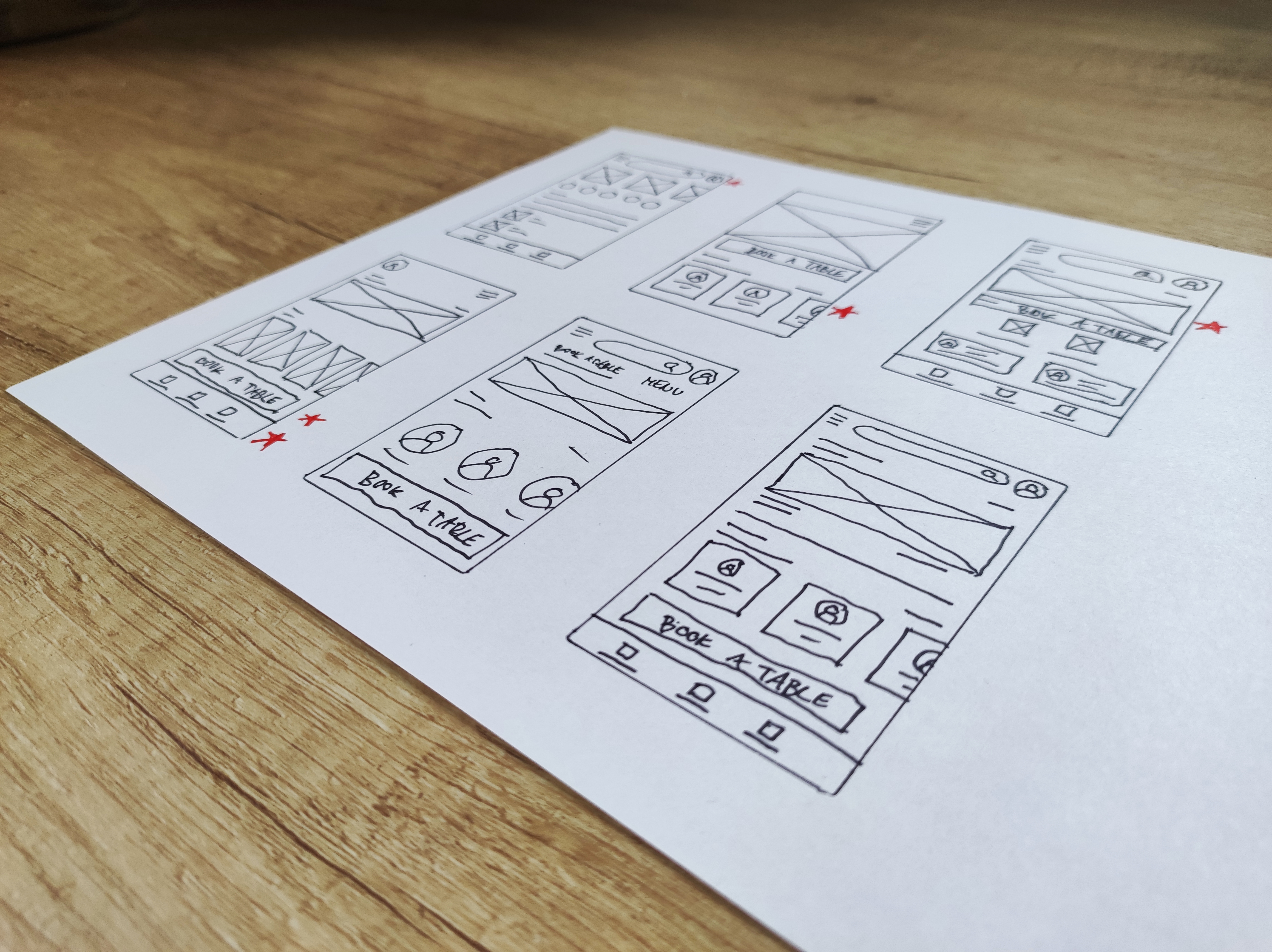
Image of paper wireframes including five different versions of the same screen
and one image of the new, refined version.
Stars were used to mark the elements of each sketch that would be used in the initial digital wireframes.
Stars were used to mark the elements of each sketch that would be used in the initial digital wireframes.
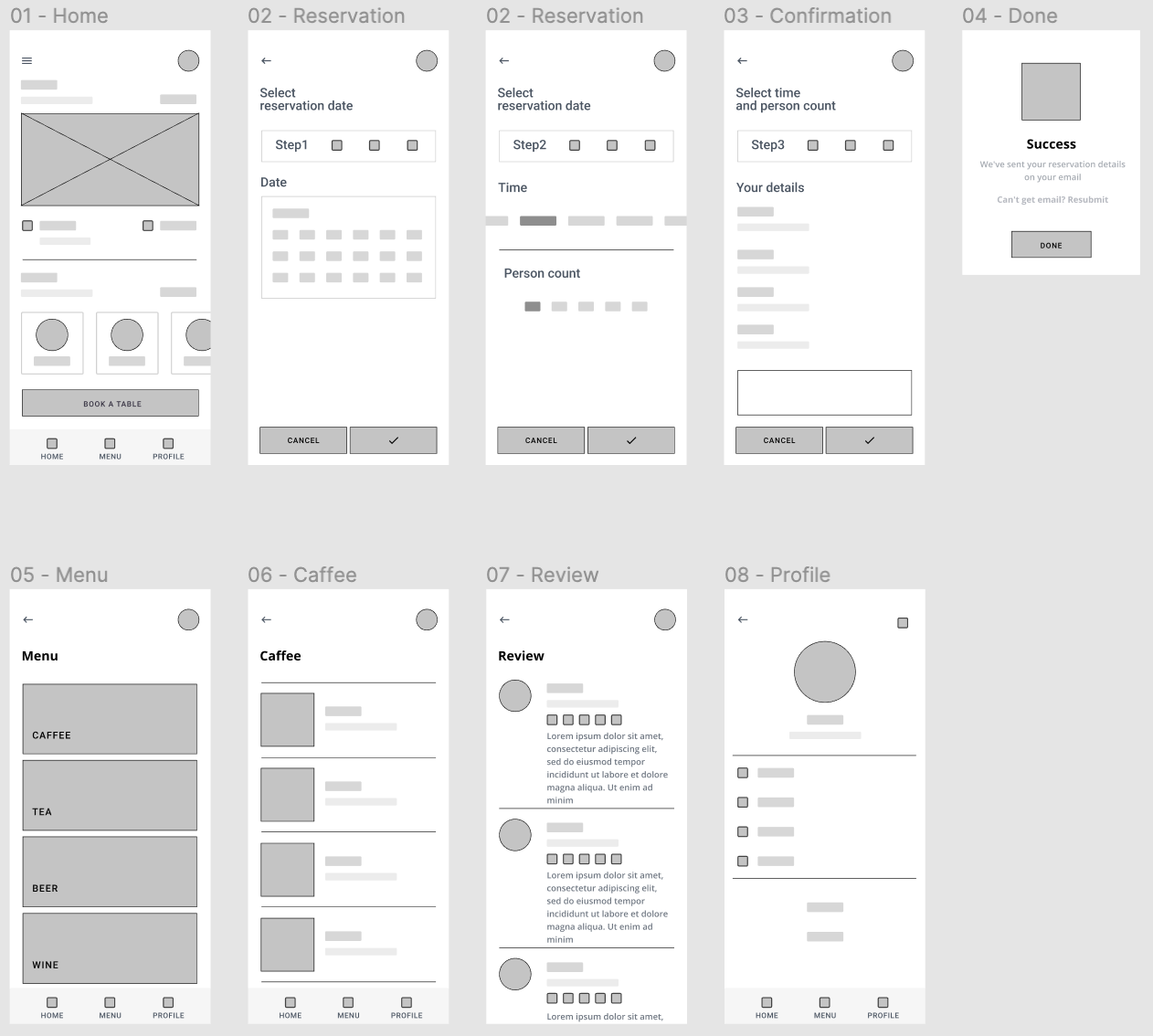
DIGITAL WIREFRAMES
Some options we came up
with from our user feedback.
DIGITAL WIREFRAMES
Some options we came up
with from our user feedback.
LOW-FIDELITY PROTOTYPE
I created a low-fidelity prototype
using digital wireframes I made
before. Booking a table is the
primary user flow so the
prototype could be used in a
usability study.
LOW-FIDELITY PROTOTYPE
I created a low-fidelity prototype
using digital wireframes I made
before. Booking a table is the
primary user flow so the
prototype could be used in a
usability study.
USABILITY STUDY: FINDINGS
Findings from the studies I conducted helped me guide the designs from wireframes and mockups to refined high-fidelity prototype
Round 1 findings

Users want to book a table in advance

The user wants to have feedback that
the table is reserved
Round 2 findings
The booking process has too many options on one page during reservation.
Organisation of home screen could
be more intuitive.
USABILITY STUDY: FINDINGS
Findings from the studies I conducted helped me guide the designs from wireframes and mockups to refined high-fidelity prototype
Round 1 findings
Users want to book a table in advance
The user wants to have feedback that
the table is reserved
Round 2 findings
The booking process has too many
unnecessary steps and screens.
Organisation of home screen could
be more intuitive.
Refining
the design
● Mockups
● High-fidelity prototype
● Accessibility
Refining
the design
● Mockups
● High-fidelity prototype
● Accessibility
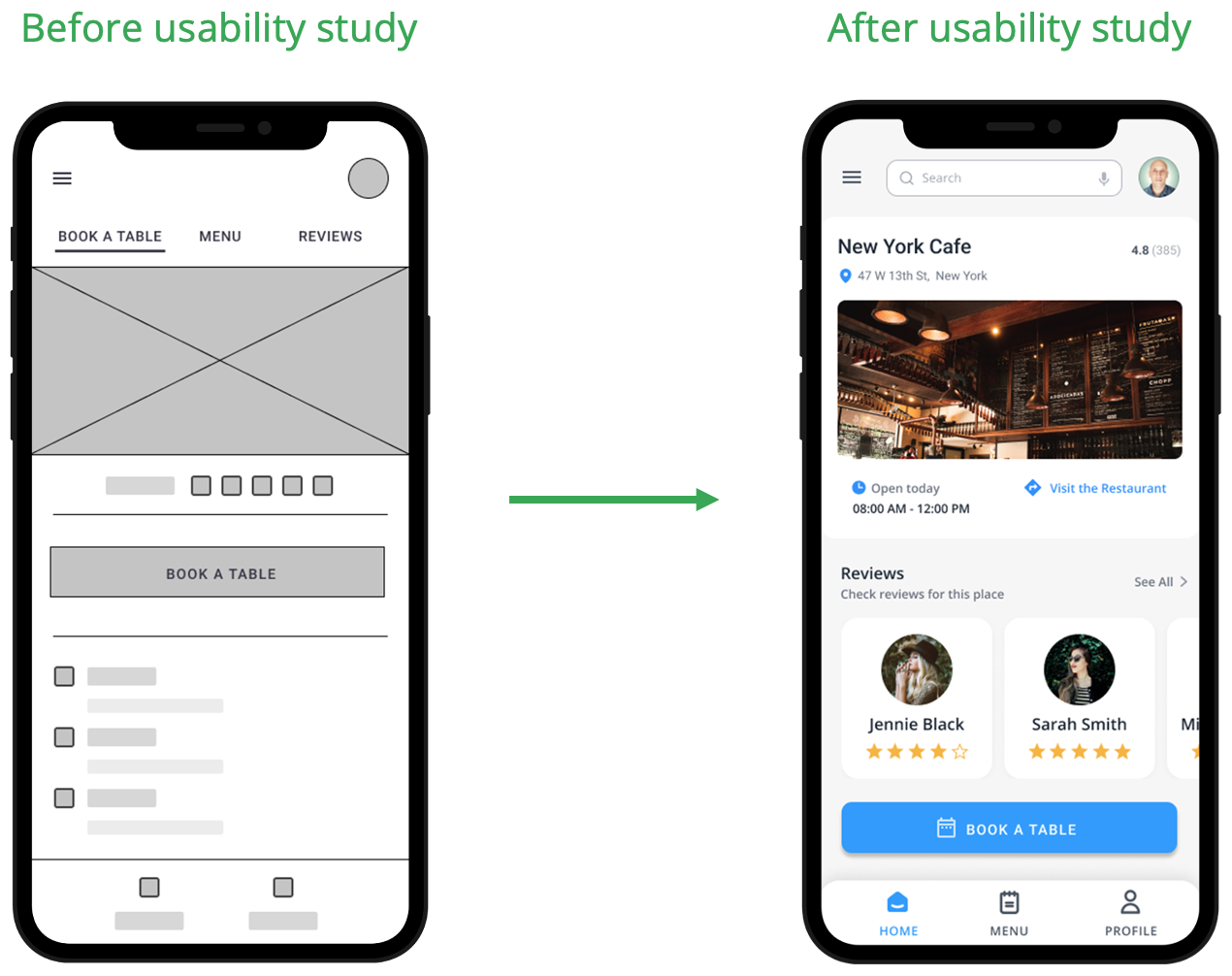
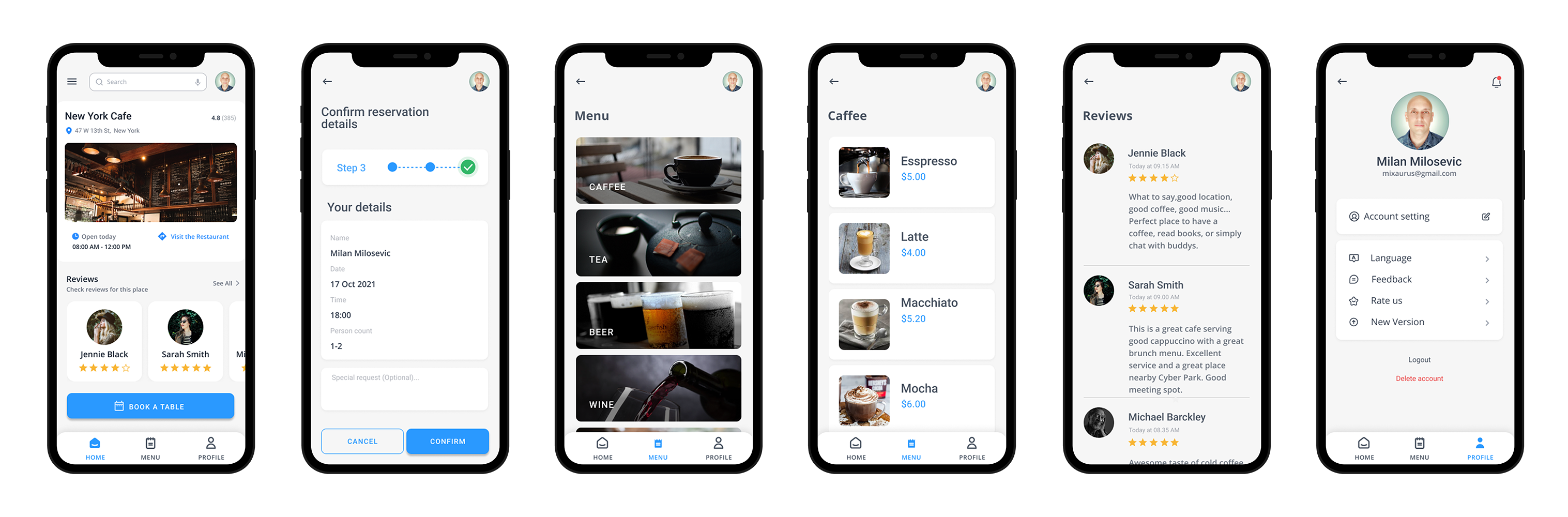
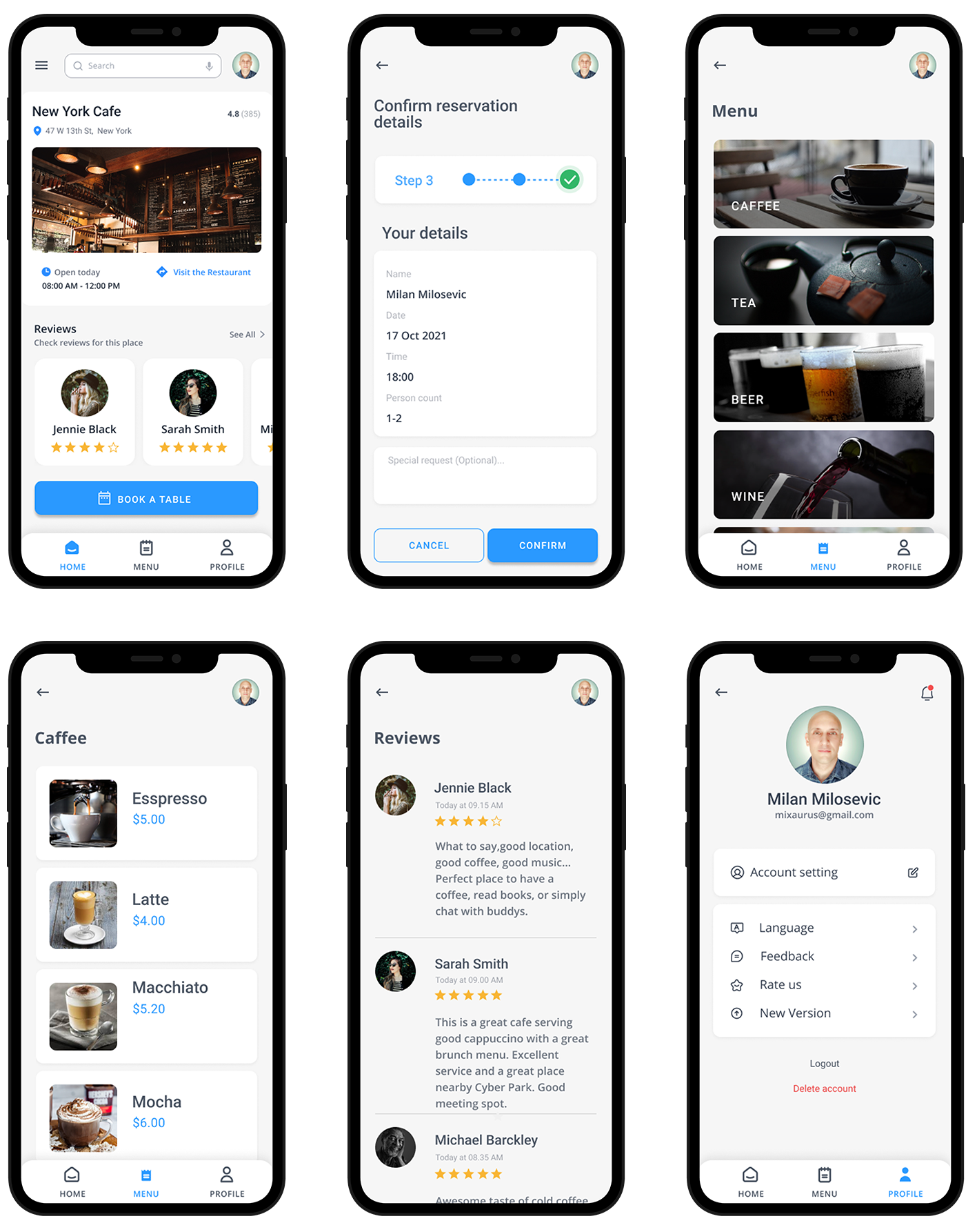
MOCKUPS
Early designs allowed
some adjustments,
but after usability
studies, I reorganized
the homepage to make
booking easier.
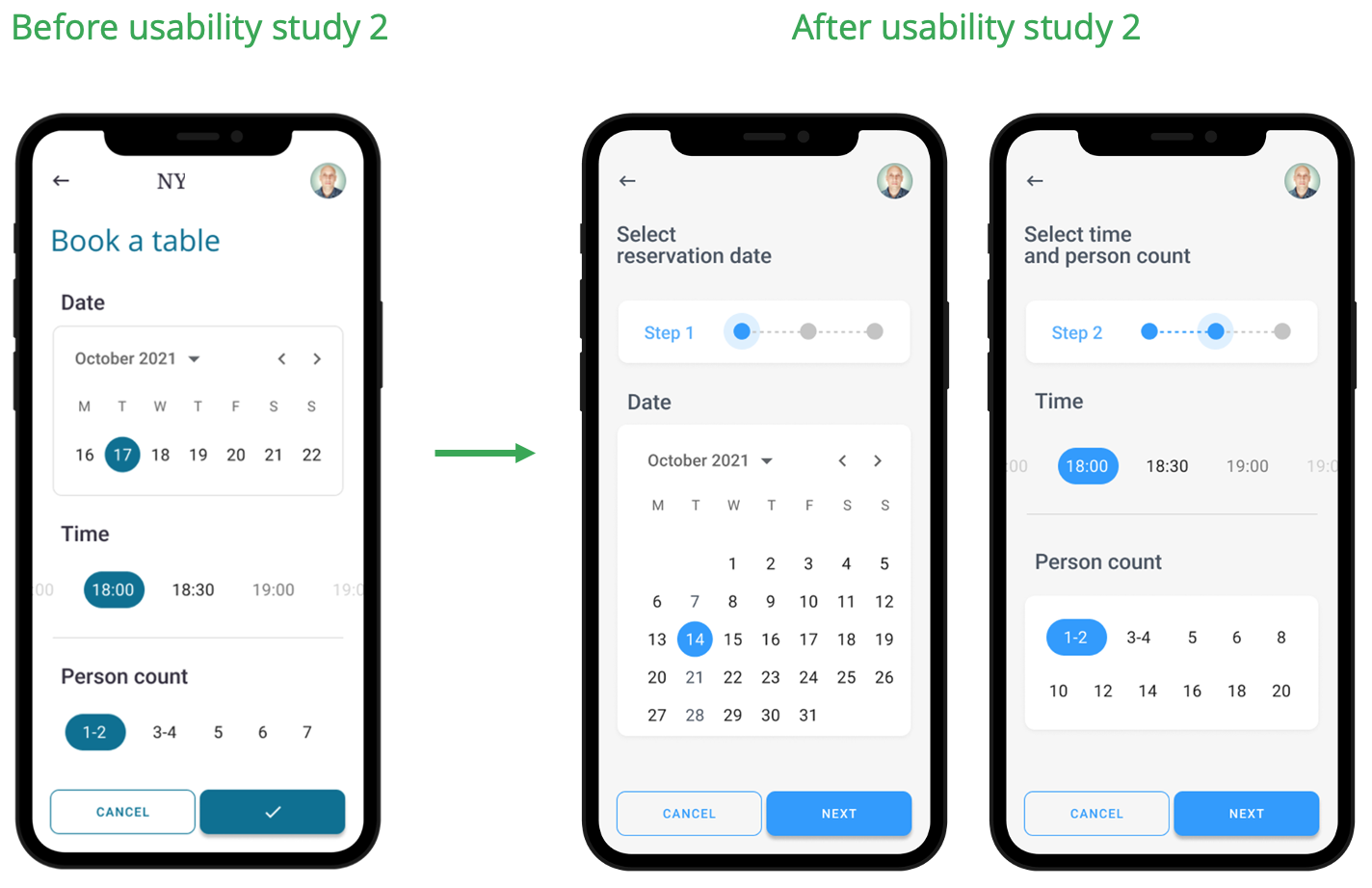
Another usability
study found
frustration on too
many options on one page during
reservation. I
made it less complicated and more intuitive.
Other screens
HIGH-FIDELITY PROTOTYPE
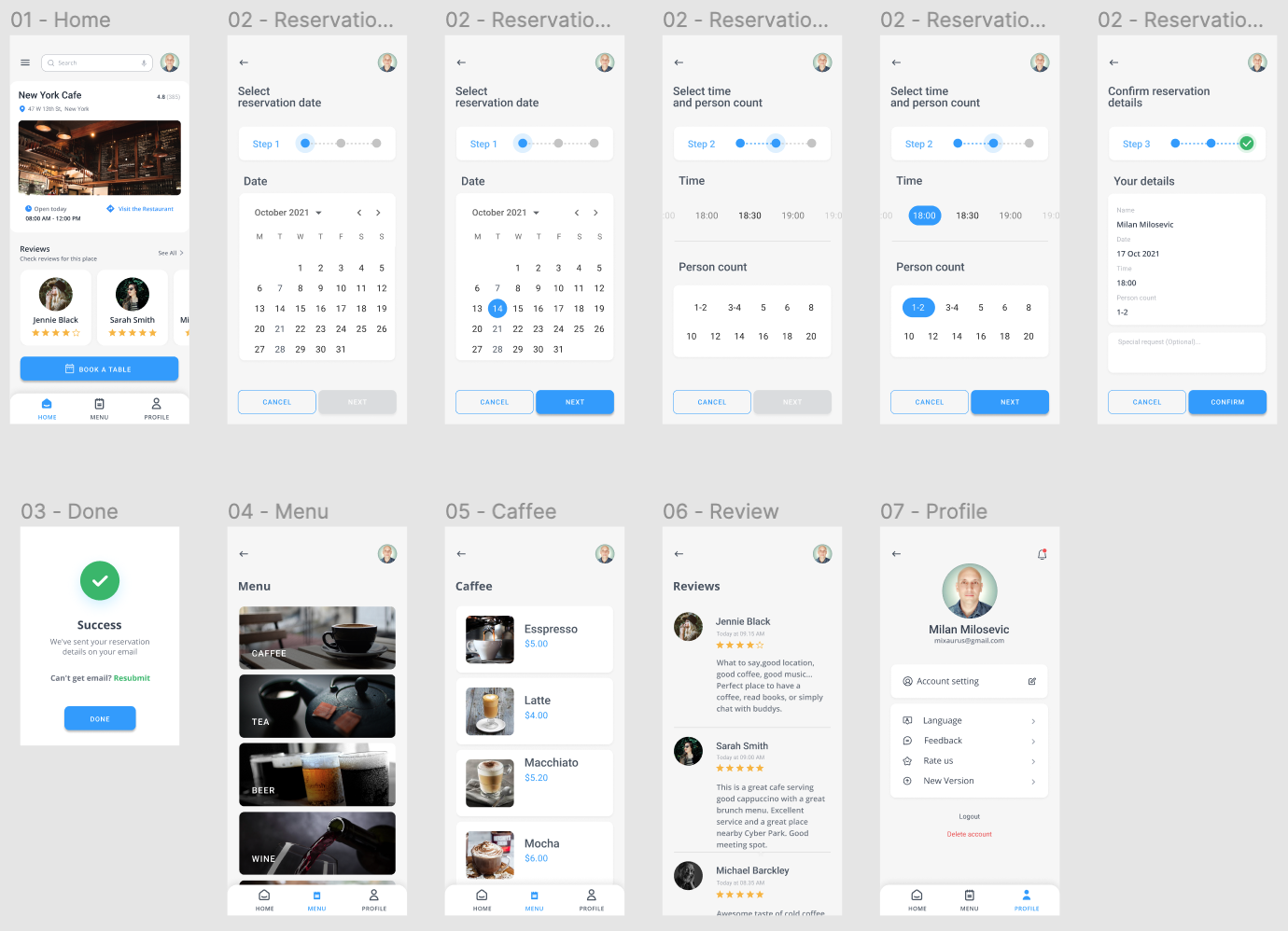
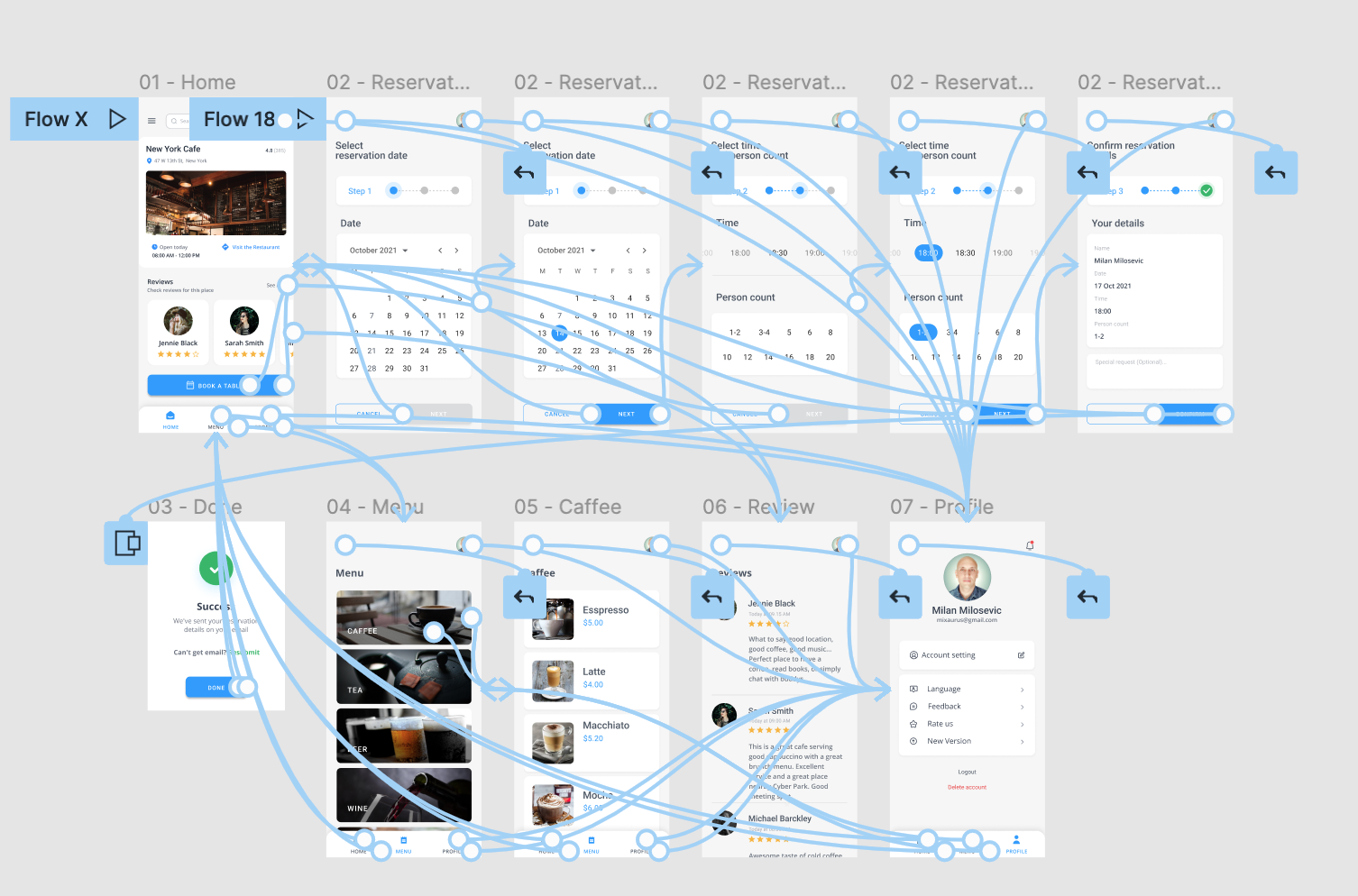
The final high-fidelity prototype
presented cleaner user flows for
booking a table.
View the NY Cafe Booking App
HIGH-FIDELITY PROTOTYPE
The final high-fidelity prototype
presented cleaner user flows for
booking a table.
View the NY Cafe Booking App
ACCESSIBILITY CONSIDERATIONS
I tried different approaches
with different design
elements on paper in order
to design the best-organized home screen
before making my digital
version. For the home
screen, I prioritized an
intuitive path for users to
book a table.
Using a bigger font
and alt text to images
for screen readers.
Making app design
more intuitive with
right set of icons.
Going forward
● Takeaways
● Next steps
Going forward
● Takeaways
● Next steps
TAKEAWAYS
Impact:
The application helps its users to better organise their coffee time.
The application helps its users to better organise their coffee time.
What I learned:
I’ve learned that personal perception is usually quite different from what an app user really needs.
I’ve learned that personal perception is usually quite different from what an app user really needs.
NEXT STEPS
Conduct as many
rounds of usability
studies as it takes to
create the best user
experience for the
users of the appt
Conduct more user
research to develop a
new features in the
app
© 2022 Mixaurus. All rights reserved.